

Pediatric nail plate removal
Nail plate removal in children is performed only when there are clear medical indications and conservative treatment is no longer effective or cannot resolve the underlying cause of pain, inflammation, or nail damage. The procedure is most commonly recommended for ingrown nails, traumatic nail injuries, severe inflammation, or other nail disorders that interfere with normal nail growth and healing. At Doctor Sam Medical Center, the procedure is performed by a pediatric surgeon under local anesthesia, taking into account the child's age and individual needs. During the consultation, the surgeon determines whether nail plate removal is truly necessary or whether a less invasive treatment option is appropriate. After the procedure, parents receive detailed instructions on wound care, dressing changes, physical activity, and their child's recovery.
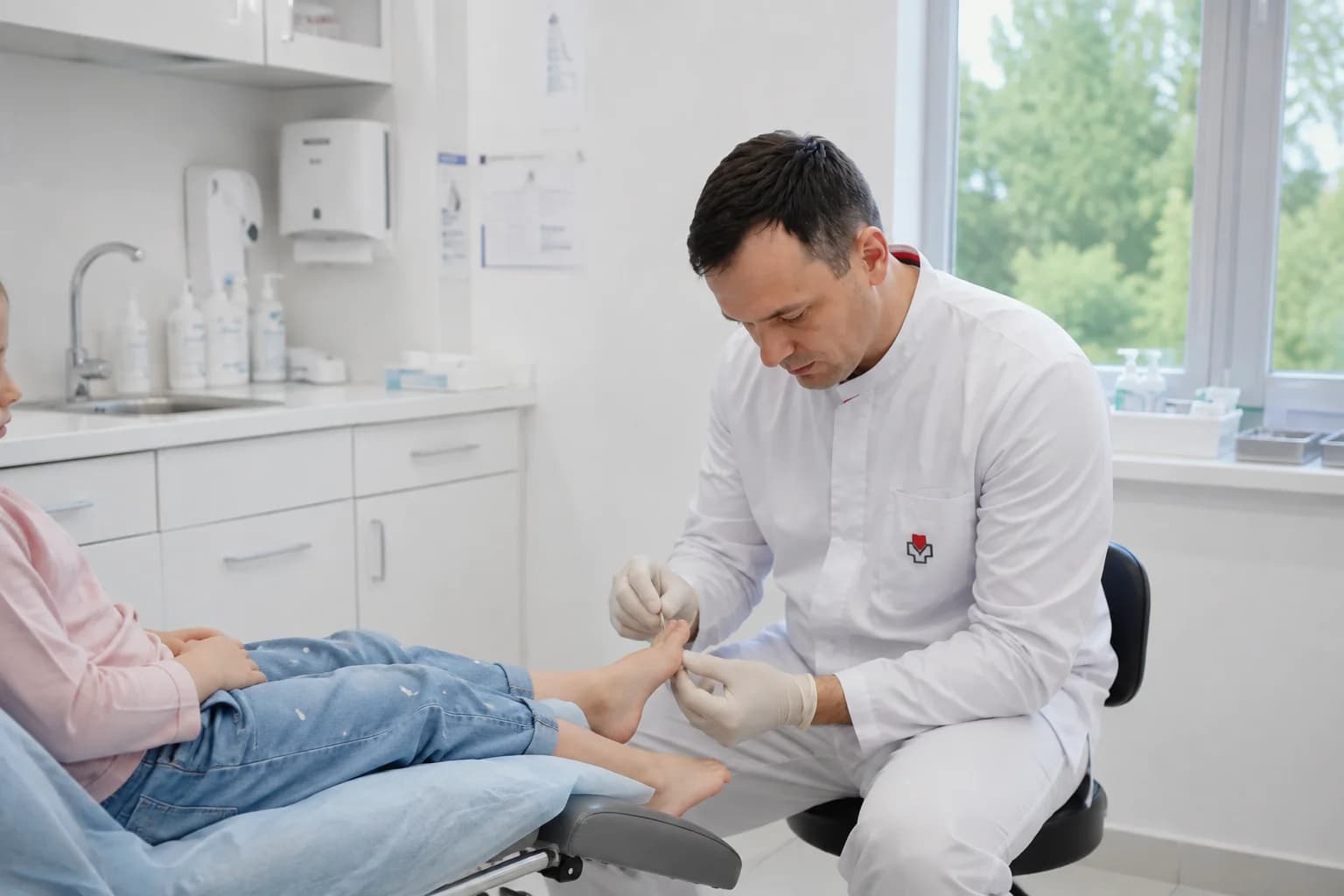
When might a child need nail plate removal?
- An ingrown nail causing pain, redness, swelling, or recurrent inflammation.
- A traumatic nail injury in which the nail plate has partially or completely detached.
- A purulent infection around the nail (paronychia) that does not respond to conservative treatment.
- A subungual hematoma following an injury, accompanied by severe pain or significant damage to the nail.
- A severe nail deformity that interferes with normal nail growth or causes discomfort.
- Chronic inflammation of the nail fold with recurrent episodes.
- Nail disorders in which preserving the nail plate is no longer possible or medically appropriate.
- A nail injury that increases the risk of infection or prevents proper healing of the surrounding tissues.

Specialists

Bosyy Oleh Anatoliyovych
Surgeon, Ultrasound doctor

Why shouldn't you remove a child's nail yourself?
After a nail injury, an ingrown nail, or the onset of inflammation, parents often try to trim the damaged part of the nail, pull it off, or remove it using household tools. However, these attempts can lead to serious complications.
This may result in abnormal nail growth, permanent nail deformity, or recurrent ingrown nails in the future.
Using non-sterile scissors, nail clippers, or other tools also carries a significant risk. Bacteria can easily enter through damaged skin, leading to a purulent infection, increased swelling, and worsening pain.
Parents should also avoid draining a subungual hematoma, cutting away the ingrown edge of the nail, or pulling off a nail after an injury even if it appears to be almost completely detached. Without an examination by a pediatric surgeon, it is impossible to accurately assess the extent of the injury, the condition of the nail bed, or determine the safest and most appropriate treatment for the child.
If you are unsure whether your child needs nail plate removal after an injury, impact, or inflammation, the best decision is to schedule a pediatric surgeon consultation. The surgeon will examine the affected finger or toe, determine whether conservative treatment is sufficient or whether surgery is necessary, and recommend the most appropriate treatment plan. If you are in another city or abroad, you can also receive initial medical advice through an online consultation with a family physician.
FAQ
How should you care for your child's finger after the procedure?
Follow your pediatric surgeon's instructions regarding dressing changes, and do not remove the dressing earlier than recommended. If the dressing becomes wet or dirty, do not change the treatment plan on your own contact your physician for further guidance.
During the first few days after the procedure, it is advisable to limit running, active play, jumping, and sports to avoid re-injury, bleeding, or recurrent inflammation. Your child should also wear comfortable, loose-fitting shoes that do not place pressure on the affected toe.
Do not allow your child to remove the dressing, touch the wound with unwashed hands, or pick at the scabs that naturally form during healing.
Doing so may delay recovery and increase the risk of infection. Monitor the healing process closely. If your child develops increasing pain, significant swelling, pus drainage, pronounced redness, an unpleasant odor from the wound, or a fever, contact a pediatric surgeon as soon as possible.
Will the nail grow back after removal?
In most children, the nail plate gradually grows back. Children's bodies have an excellent healing capacity, and if the nail bed has not been significantly damaged, a new nail usually grows back without major changes.
The time required for regrowth depends on the child's age, the type of injury or nail disorder, the extent of the surgical procedure, and how carefully the postoperative instructions are followed. If the nail bed has been damaged, the recovery process may take longer, and the new nail may differ slightly in appearance from the original one.
For this reason, it is important not to delay a pediatric surgeon consultation or attempt self-treatment. Early medical care helps preserve as much healthy tissue as possible and provides the best conditions for healthy nail regrowth.
Book a procedure
You can submit an appointment request through our website, call us directly, or choose the communication method that is most convenient for you using the messaging apps listed on our Contact page. Our administrators will help you schedule the earliest available consultation or procedure and answer any organizational questions you may have.
Appointments: +380 97 312 92 91 Medical Center Address: 1 Kiltseva Road, Respublika Park Shopping Mall, Kyiv, Ukraine


