

Core corn removal
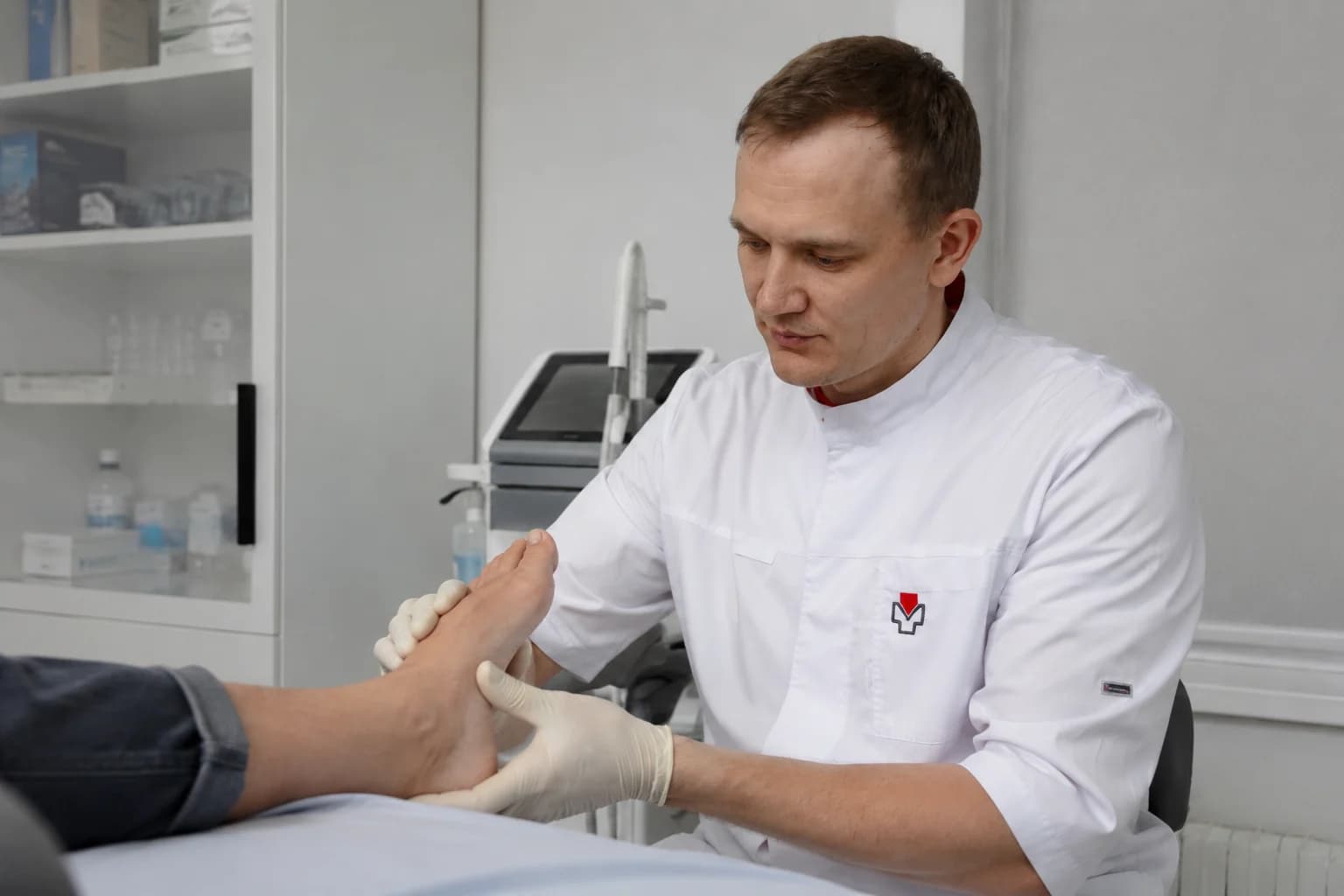
A core corn is a dense, often painful lesion that can make walking uncomfortable, cause pain under pressure and recur after attempts at self-removal. At Doctor Sam, the doctor examines the foot, assesses the characteristics of the lesion and selects the most appropriate removal approach to address the source of local pain and help prevent recurrence.

Specialists

Bosyy Oleh Anatoliyovych
Surgeon, Ultrasound doctor

What is a core corn and how can you recognize it?
A core corn is an area of thickened, hardened skin with a dense central core that extends deeper into the tissue. It develops as the skin responds to persistent localized pressure or friction: epidermal cells produce and accumulate excess keratin, gradually forming a dense lesion.
Core corns most commonly develop on the sole of the foot, the ball of the foot, the heels, or between the toes. They may appear as a small, rounded area of hardened skin with a noticeably denser center. Under pressure, this central core presses into the deeper layers of the skin and causes the characteristic pain.
An important feature is that the corn may not hurt continuously. Pain is often triggered by walking, direct pressure, or putting weight on a particular area of the foot. As a result, a person may unconsciously change the way they walk to avoid the painful spot. If the pressure continues, the lesion can become denser and gradually interfere with everyday activity.
A core corn is often mistaken for a callus or a plantar wart. A callus is usually a more superficial and widespread thickening of the skin without a clearly defined central core. A plantar wart has a different origin and may have characteristic black dots and an uneven surface. Therefore, appearance alone does not always make it possible to reliably determine what type of lesion is present.
Another characteristic of a core corn is that it can persist for months or return after attempts to cut away the hardened skin. Removing only the superficial layer does not eliminate the factors that caused the lesion to develop, while cutting the skin incorrectly can damage healthy tissue.
If the lesion is painful, keeps returning after removal, or you are not sure whether it is a core corn, it is worth having it examined by a doctor. Correctly identifying the nature of the lesion helps determine the appropriate treatment approach and avoids spending time on methods that may not be suitable for your particular case.
Why does a core corn develop?
- Tight or poorly fitting footwear that puts constant pressure on a specific area of the foot.
- Shoes with stiff seams, uneven surfaces, or features that repeatedly rub against the skin.
- Repeated friction during walking or physical activity.
- Excessive or uneven pressure on specific areas of the foot.
- Toe deformities or changes in foot shape that lead to uneven pressure distribution.Gait abnormalities and the way the foot bears weight.
- Prolonged standing or walking, especially in footwear that does not fit the shape of the foot.
- Excessively dry skin and a tendency toward increased keratinization.
- Repeated trauma to the same area of the foot.
- Improper or incomplete corn removal, after which the problem quickly returns.
FAQ
Can you remove a core corn yourself?
Cutting out a core corn yourself with scissors, a blade, or other sharp objects is an unsafe way to deal with the problem. Removing the upper layer of hardened skin does not guarantee that the core will be eliminated, while damaging healthy tissue can lead to bleeding, inflammation, and infection.
A pumice stone or foot file may reduce the thickness of the superficial layer of skin, but it does not remove a deeper lesion. Acid-based products and medicated corn plasters should also be used with caution: if a core corn is mistaken for a wart or another type of lesion, self-treatment may be damage the surrounding skin.
Home removal should especially be avoided if the corn is very painful, bleeding, inflamed, changing rapidly, or repeatedly appearing in the same location.
If you are unsure what is causing the lesion on your foot, you can start with a consultation with a family doctor. The doctor can assess the situation and determine whether an in-person examination and consultation with a surgeon are needed.
How can you prevent a core corn from coming back?
Choose footwear based on the shape of your foot, not just its size. It should not squeeze the toes, put excessive pressure on the sole, or repeatedly rub the same area. If a corn keeps developing in the same spot, it is important to look beyond skin care and consider why that particular area is being consistently overloaded.
Avoid repeatedly cutting away the hardened skin yourself. Regular mechanical trauma can maintain excessive keratinization. Regularly moisturizing the skin of the feet and monitoring its condition are important, particularly if your skin is prone to dryness and cracking.
If the corn keeps returning despite changing your footwear and improving foot care, it is advisable to see a doctor. The cause may involve also the way pressure is distributed across the foot or its structure. In such cases, it is important to address also the factor contributing to the problem.
How is core corn removal performed at Doctor Sam?
The procedure begins with an examination of the lesion. The doctor assesses its location, size, depth, and characteristics, and asks when the corn appeared, whether it causes pain, and whether you have previously tried to remove it.
After the examination, the treatment approach is determined. The removal method depends on the characteristics of the specific lesion and the condition of the surrounding skin, so it is selected individually rather than according to a single approach for every patient.
After removal, the doctor provides recommendations for caring for the treated area and reducing pressure on it. If there are factors that may contribute to the recurrence of the core corn, these should also be addressed.
If you are unsure which specialist to see, a consultation with a surgeon can be the first step. The doctor will assess the lesion and determine the appropriate next steps.
Book a consultation for core corn removal
If a core corn is painful, makes walking uncomfortable, or keeps coming back after self-removal, see a doctor for an examination and an appropriate treatment plan. Doctor Sam is located in Kyiv at 1 Kiltseva Road, Respublika Park Shopping Mall. To book a consultation with a surgeon or clarify any details, call us at +380 97 312 92 91.


