When should frequent colds at preschool be evaluated by an immunologist?
A runny nose, cough and fever may recur with only short breaks in between, especially during the first few months of attending preschool. In most cases, this is due to frequent exposure to viruses that the child's immune system has not yet developed specific protection against. However, it is important to understand which symptoms are typical for preschool-aged children and which may require further evaluation.
How many times a year can a child get sick and still be considered healthy?
During the first two years of life, most children experience approximately 8–10 colds a year. Children who attend preschool or have older siblings going to school may experience even more frequent infections.
A common cold in young children usually resolves within two weeks. However, a cough may persist longer than a runny nose or other symptoms. If a child has not fully recovered before another virus starts spreading in their preschool group, infections may overlap.
There is therefore no universal number of colds beyond which an immune system disorder can be suspected. It is important to consider the child's age, preschool environment, the nature of the infections and how well the body recovers from each illness.
Why do children get sick more often after starting preschool?
At home, children interact with a relatively limited number of people. At preschool, they interact with other children every day, share toys and spend time in the same indoor spaces with many people. This significantly increases their exposure to respiratory viruses.
Young children do not always follow hygiene practices, frequently touch their faces and share toys. Some viruses can also be transmitted before an infected person develops their first symptoms. The situation usually changes as children grow older. They gradually build up immunological experience, and the frequency of respiratory infections tends to decrease. Paediatricians note that the number of these illnesses generally begins to decline during the second year of attending a childcare setting.
This does not mean that children should be deliberately exposed to viruses. It is part of the natural process of immune system development that takes place throughout childhood.
What should you look out for besides the number of colds?
Two children of the same age may get sick equally often, but one may experience ordinary viral infections, while the other has recurrent bacterial infections with complications.
The following situations should raise concern:
- Infections regularly lead to pneumonia, bacterial sinusitis or ear infections.
- Illnesses are severe or require prolonged antibiotic treatment.
- Unusual infections or recurrent deep-seated abscesses occur.
- Fungal infections of the skin or mucous membranes persist for a long time or keep coming back.
- The child has poor weight gain or delayed physical development.
- The child does not fully recover between illnesses.
Particular attention should also be paid to a persistent runny nose, nasal congestion and a persistent cough.
For example, enlarged adenoids can cause difficulty breathing through the nose, snoring and recurrent ear infections. If your child frequently breathes through their mouth or complains of ear pain, it is worth consulting a paediatric ENT specialist.
If a runny nose is accompanied by frequent sneezing, an itchy nose and watery eyes, particularly after exposure to certain triggers, a consultation with a paediatric allergist may be appropriate.
10 warning signs of possible immunodeficiency in children
Primary immunodeficiencies are a group of disorders in which certain mechanisms of the immune system do not function properly. As a result, the body has greater difficulty fighting certain infections. A list of 10 warning signs has been developed to help identify these conditions early:
- Four or more new ear infections within one year.
- Two or more serious sinus infections within one year.
- Two months or more of antibiotic treatment with little improvement.
- Two or more episodes of pneumonia within one year.
- An infant who has poor weight gain or fails to grow as expected for their age.
- Recurrent deep skin or internal organ abscesses.
- Persistent oral thrush or recurrent fungal skin infections.
- A need for intravenous antibiotics to treat infections.
- Two or more serious infections, including sepsis.
- A family history of primary immunodeficiency.
If your child has two or more of these warning signs, we recommend consulting a paediatric immunologist.
It is important to understand that this list is a screening guide for the early detection of possible immune disorders, not a diagnostic test. Ordinary viral colds, even when frequent, are not in themselves an indication of primary immunodeficiency.
When does a child need a paediatrician and when an immunologist?
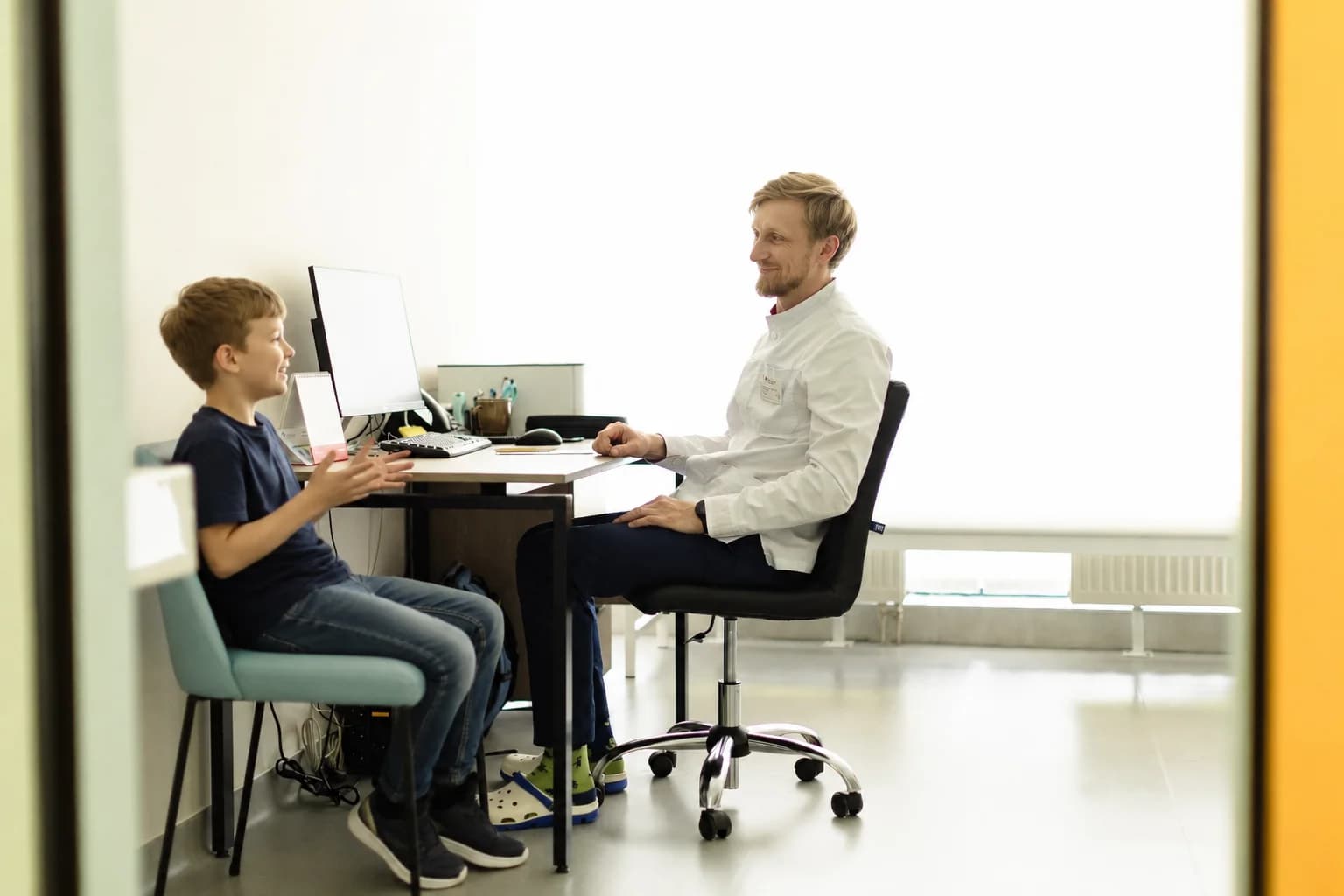
A paediatrician is the first specialist to consult if your child frequently gets sick. The doctor will assess the child's overall health, infection history and physical development, and determine whether further investigations are needed. A paediatric consultationis recommended if your child frequently falls ill, has a prolonged cough, a persistent runny nose, or recurrent ear infections and other complications. You should also seek medical advice if your child struggles to return to their usual level of activity after an illness.
A paediatric immunologist is needed when there is a suspicion of an immune system disorder. This may be the case if a child experiences recurrent pneumonia, severe bacterial infections, deep abscesses, persistent fungal infections or poor weight gain associated with frequent infections. If there is a family history of primary immunodeficiency, it is also essential to inform the doctor.
A paediatric immunologist at Doctor Sam Medical Centre will assess your child's medical history and determine whether further diagnostic testing is necessary.
What tests may a paediatric immunologist recommend?
The assessment begins with a consultation and a review of the child's medical history. The doctor will ask how often the child gets sick, what types of infections they experience, how long treatment takes and whether complications occur.
During the examination, the doctor will also assess the child's height and weight, as well as the condition of their lymph nodes, skin and mucous membranes. This helps identify any signs that may require further investigation.
Depending on the clinical picture, the following tests may be recommended:
- Complete blood count with differential.
- Measurement of immunoglobulin levels (IgG, IgA and IgM).
- Assessment of specific lymphocyte populations.
- Evaluation of specific antibody responses to certain vaccines.
- Additional tests to assess individual components of the immune system.
Not every child needs all of these tests. For example, measuring immunoglobulin levels may be part of the initial assessment, while evaluating lymphocyte counts or their subpopulations is recommended only when clinically indicated. Test results must be interpreted in the context of the child's age, symptoms and medical history.
The aim of the assessment is to determine whether there is an impairment in the immune response and whether the child requires specific treatment.
How to reduce the risk of infections at preschool
It is impossible to completely avoid exposure to viruses in a childcare setting. However, several measures can help reduce the risk of infection and support your child's health.
Vaccination – follow the National Immunisation Schedule. Discuss influenza vaccination and any other recommended vaccines with your paediatrician. Find out more on our children's vaccination page.
Hand hygiene – teach your child to wash their hands after preschool, after using the toilet and before meals.
Adequate sleep – maintain a sleep routine appropriate for your child's age. Insufficient sleep can negatively affect overall health.
A varied diet – make sure your child's diet includes vegetables, fruit, protein-rich foods, grains and other sources of essential nutrients.
Physical activity – regular walks and physical activity are important for normal growth and development.
Ventilation – regularly airing indoor spaces helps reduce the concentration of respiratory pathogens in enclosed areas.
Recovery after illness – do not send your child back to preschool if they are still feeling unwell.
When should you seek medical attention during a cold without delay?
Consult a doctor if your child's fever lasts five days or longer, they refuse to drink, urinate less frequently, become unusually lethargic, or their condition worsens again after a temporary improvement.
An infant under three months of age with a temperature of 38°C or higher requires urgent medical assessment.
Call emergency services (103) if your child has difficulty breathing, their lips or tongue turn blue, they are difficult to wake, experience seizures or develop a rash that does not fade when pressed.
When should you consult a paediatric immunologist at Doctor Sam?
Frequent colds after starting preschool are generally part of a child's normal experience of being exposed to viruses. However, if infections are severe, accompanied by recurrent complications or associated with poor growth and development, it is important to identify the underlying cause.
At Doctor Sam Medical Centre in Kyiv, you can consult a paediatrician or a paediatric immunologist. The doctor will assess your child's health, review their medical history and determine whether further investigations are necessary.
Do not try to boost your child's immune system on your own using immunomodulators, «immune support» syrups or multiple dietary supplements. These products are not proven methods of preventing common colds. Medications and vitamins should only be given when medically indicated and on a doctor's recommendation.
To book an appointment, call +380 97 312 92 91. Address: Doctor Sam Medical Centre, 1 Kiltseva Road, Respublika Park Shopping Mall, Kyiv, Ukraine.
More medical center news
All news