

Tick removal
The longer a tick remains attached to the skin, the greater the potential risk of transmitting tick-borne infections. At Doctor Sam Medical Center, tick removal is performed quickly, safely, and in accordance with current medical guidelines. After the procedure, the physician examines the bite site, provides personalized follow-up recommendations, and, when necessary, advises additional testing or treatment. We provide professional care for both children and adults to help reduce the risk of complications after a tick bite.
What should you never do after a tick bite?
- Apply oil, petroleum jelly, cream, alcohol or other substances to the tick. These methods do not cause the tick to detach and may increase the release of its stomach contents into the bite wound, potentially increasing the risk of transmitting infections.
- Burn the tick with a match, lighter, or any hot object. This is not an effective removal method and may cause burns or additional skin damage.
- Pull the tick out forcefully with your fingers or tweezers. Excessive force may tear the tick apart, leaving its mouthparts embedded in the skin and making removal more difficult.
- Crush the tick with your bare hands. If the tick carries infectious pathogens, direct contact with its body fluids may pose an additional risk.
- Use needles, knives, or other non-sterile objects to dig into the skin. This can damage surrounding tissue and increase the risk of a bacterial skin infection.
- Ignore the bite site after the tick has been removed. Even after successful removal, the bite area and your overall health should be monitored for several weeks.
- Start taking antibiotics without medical advice. Preventive antibiotic treatment is not necessary in every case. The decision should be made by a physician after evaluating your individual situation.
- Covering the bite site with an adhesive bandage or an airtight dressing unnecessarily. After the tick has been removed, the bite area should be kept clean and dry. If there is no bleeding or other medical indication, it is usually sufficient to disinfect the skin with an antiseptic and monitor the bite site for any changes.
Specialists


Bosyy Oleh Anatoliyovych
Surgeon, Ultrasound doctor

Moroz Diana Oleksandrivna
Mammologist, Surgical oncologist

Stebnytska Valeria Leonidivna
Pediatric dermatovenereologist, Dermatovenereologist

How is tick removal performed at the medical center?
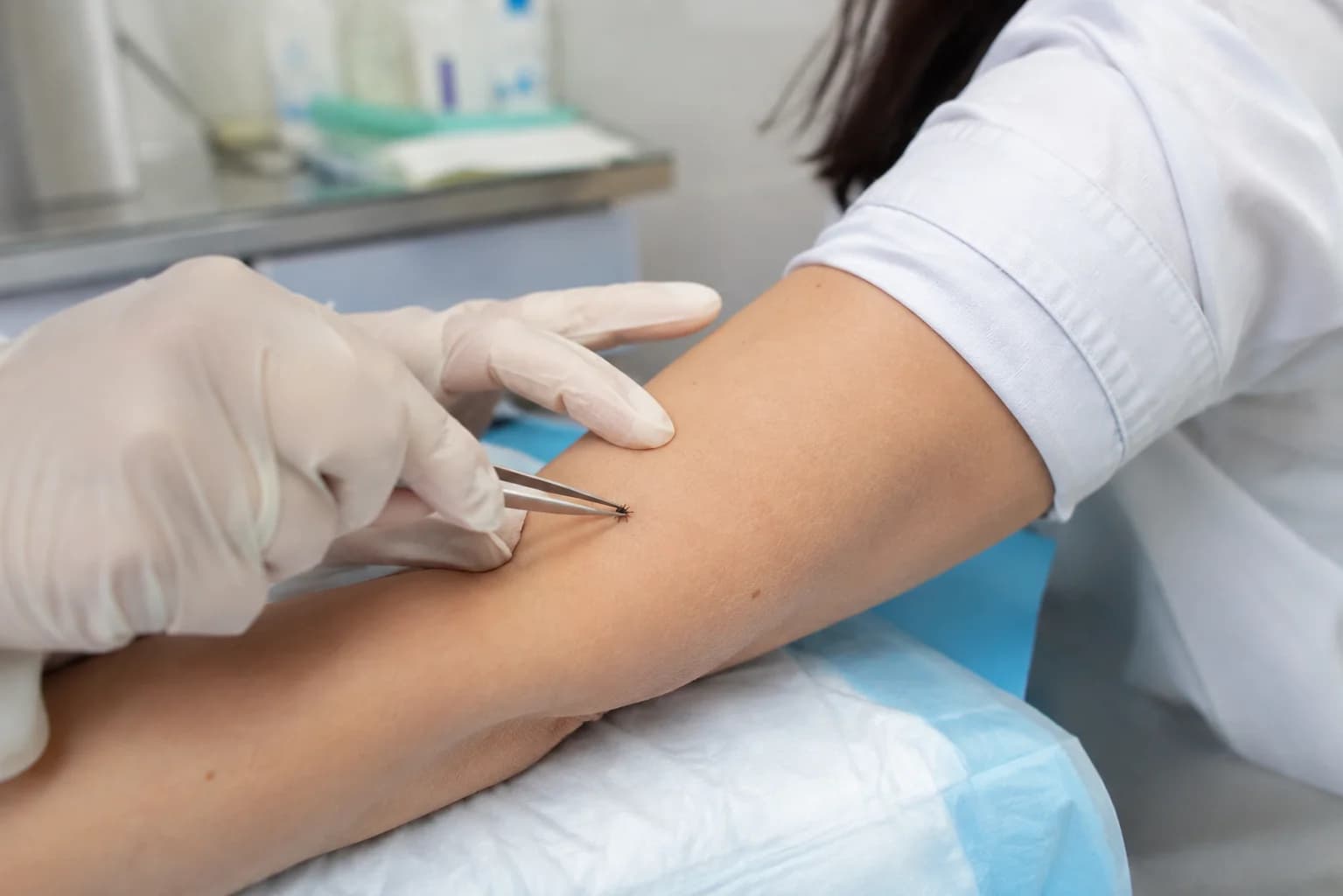
Tick removal is a quick medical procedure designed to safely extract the tick while minimizing trauma to the skin. At Doctor Sam Medical Center, the procedure is performed in accordance with current medical guidelines. After the tick is removed, the physician examines the bite site and provides individualized recommendations for follow-up care.
1. Examination of the bite site
The physician carefully examines the area where the tick is attached, evaluates its location and degree of attachment, assesses the condition of the surrounding skin, and determines approximately when the bite occurred. This information helps guide further medical management.
2. Safe tick removal
The tick is removed using specialized sterile instruments designed to extract it as gently as possible without squeezing or damaging its body. This approach helps reduce the risk of leaving mouthparts embedded in the skin and minimizes tissue injury.
3. Treatment of the bite site
Once the tick has been removed, the bite area is disinfected with an appropriate antiseptic. The physician ensures that the tick has been removed completely and checks for any signs of local inflammation or other changes that may require additional attention.
4. Assessment of the risk of tick-borne infections After the procedure, the physician evaluates the individual risk of tick-borne infections. If necessary, factors such as the estimated duration of tick attachment, the location of the bite, clinical symptoms, and other relevant considerations are taken into account to determine the most appropriate follow-up plan.
5. Personalized recommendations
At the end of the visit, patients receive detailed instructions on how to care for the bite site, which symptoms should be monitored over the following weeks, and when it is important to seek medical attention again. If indicated, the physician may recommend a consultation with a family physician, pediatrician (for children), infectious disease specialist, or additional laboratory testing.
Tick removal at home
The safest way to remove a tick is at a medical center, where a physician can perform the procedure using sterile instruments, examine the bite site, and provide appropriate follow-up recommendations. However, there are situations when immediate medical care is not available for example, if you are traveling, staying abroad, hiking, camping, or are far from the nearest healthcare facility. In these cases, a tick may be removed safely at home by following the correct technique.
How to remove a tick properly
- Use a dedicated tick removal tool or fine-tipped tweezers.
- Grasp the tick as close to the skin's surface as possible, avoiding pressure on its body.
- Pull the tick upward slowly and steadily without twisting or jerking.
- After removing the tick, disinfect the bite site with an antiseptic.
- Wash your hands thoroughly with soap and water or use an alcohol-based hand sanitizer.
- Monitor the bite site and your overall health for the next several weeks.
If you have any concerns after a tick bite, develop redness, a rash, fever, or are unsure whether the tick was removed completely, we recommend scheduling an online consultation with a family physician. The doctor can assess your situation, determine whether additional treatment is necessary, explain which symptoms require close monitoring, and advise you on when you should seek care at the nearest healthcare facility.
FAQ
Is tick removal painful?
The procedure usually takes only a few minutes and does not require anesthesia. Most patients experience only mild discomfort, which depends on the location of the tick bite and individual skin sensitivity. After the tick is removed, the physician disinfects the bite site and provides detailed instructions on proper wound care and follow-up.
What should I do if part of the tick remains in the skin?
In some cases, the tick's mouthparts may remain embedded in the skin after an attempt at self-removal. Do not try to remove them yourself using a needle, knife, or any other sharp object, as this may damage the surrounding tissue and increase the risk of bacterial infection. A physician can safely remove any remaining parts of the tick, disinfect the bite site, and determine whether any additional treatment or follow-up is necessary.
How soon can symptoms appear after a tick bite?
Symptoms may develop anywhere from a few days to several weeks after a tick bite. It is important to watch for signs such as an expanding bull's-eye rash (erythema migrans), fever, headache, muscle or joint pain, swollen lymph nodes, or unusual fatigue. If any of these symptoms occur, you should seek medical attention as soon as possible for further evaluation.
Do all ticks carry Lyme disease?
No. Not every tick carries the bacteria that cause Lyme disease or other tick-borne infections, and not every tick bite results in infection. However, it is impossible to determine whether a tick is infected simply by looking at it. For this reason, it is important to monitor your health after a tick bite and consult a physician if you develop any concerning symptoms.
Book a tick removal appointment
If you discover a tick attached to your skin, do not delay seeking medical attention. The sooner the tick is removed, the lower the potential risk of complications. At Doctor Sam Medical Center, tick removal is performed quickly, safely, and in accordance with current medical guidelines. After the procedure, the physician will examine the bite site, assess the risk of possible tick-borne infections, and explain which symptoms should be monitored in the following days and weeks.
You can schedule a Tick Removal appointment by calling +380 97 312 92 91 or by using the online appointment form on our website.
Medical Center Address: Kyiv, Kiltseva Road 1(«Respublika Park» Mall)


