

Paediatric ophthalmologist consultation
Vision is one of the first systems to develop in a child – and one of the first where problems can arise. Short-sightedness, astigmatism, strabismus, amblyopia – most of these conditions can be successfully corrected when identified early. At Doctor Sam Medical Centre, the paediatric ophthalmologist provides comprehensive eye examinations for children from birth: visual acuity assessment, fundus examination, detection of refractive errors and oculomotor disorders. Where needed, the specialist prescribes glasses or contact lenses and draws up an individual monitoring or treatment plan.

When to take your child to an ophthalmologist and how often
- Newborn: examination at the maternity hospital to rule out congenital conditions
- 1 month: assessment of tear ducts, pupillary response and fundus
- 6 months: first refraction assessment, screening for predisposition to short-sightedness, astigmatism and strabismus
- 1 year: follow-up check, assessment of visual system development
- 3 years: first full visual acuity test
- 6–7 years: mandatory check-up before starting school: visual demands increase significantly
- Annually: from school age onwards, even without any complaints
Specialists
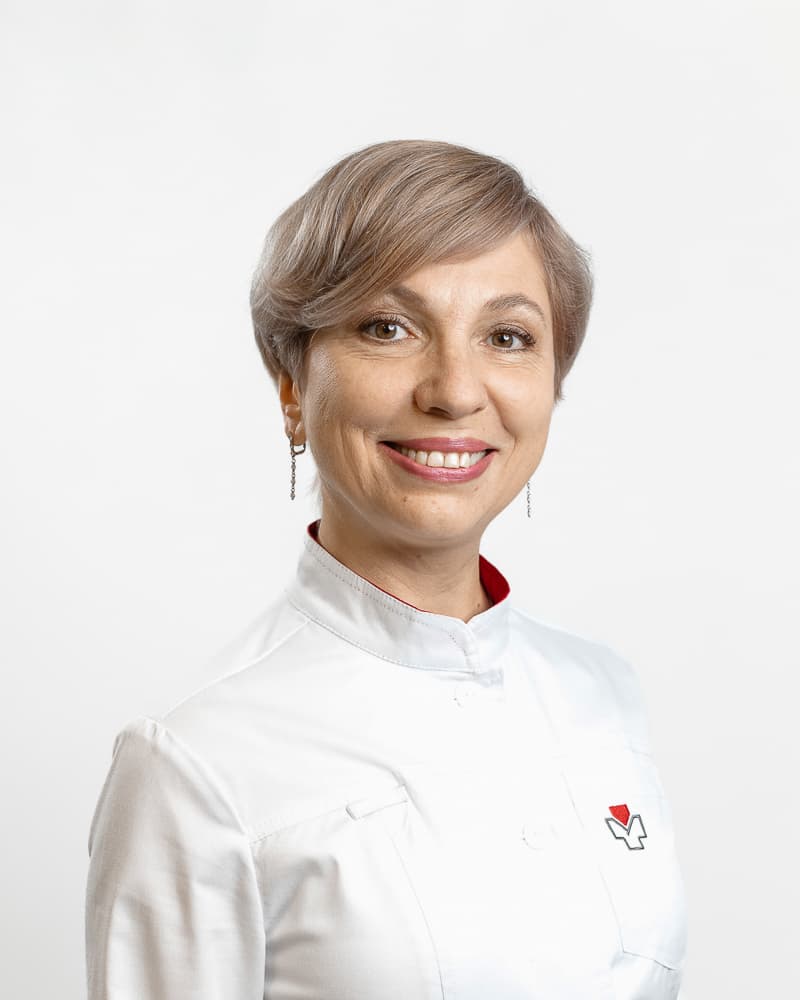
Savina Olena Mykhailivna
Pediatric ophthalmologist, Ophthalmologist, Ophthalmic geneticist

The impact of screens and studying on a child's vision
Modern children spend an average of 4–6 hours a day in front of screens – and this directly affects their eyesight. Research shows that one in five preschoolers already has vision problems related to excessive eye strain.
When looking at a screen, children blink up to three times less than usual. This leads to dry eye syndrome: fatigue, burning and a gritty feeling in the eyes. When focusing on something close up for long periods, the muscle that controls the lens is under constant tension – this is one of the main mechanisms behind the development of myopia in school-age children.
Another factor is blue light from screens. It penetrates deeper into eye tissue than visible light and can negatively affect the retina with prolonged exposure. In children under 10, the lens does not yet fully protect the retina from blue light – which is why age-appropriate screen time limits matter so much.
Visual strain from studying is another important factor: reading in poor lighting, extended writing sessions, and intensive school preparation at age 5–6 can accelerate existing vision problems or contribute to the development of new ones.
How to protect your child's vision:
- The 20–20–20 rule – every 20 minutes of screen time or reading, take a break: look at something in the distance – a tree outside the window, a building across the street – and count to 20. This is enough to relieve tension in the eye muscles and let them rest.
- Daily outdoor time of at least 1.5–2 hours. Research confirms that natural daylight slows the progression of myopia.
- Correct screen distance – at least 50 cm for a tablet and 60 cm for a laptop. A simple way to measure: an outstretched arm from nose to screen is roughly the safe distance.
Consistently reminding children about these simple habits helps form routines that support long-term eye health.
FAQ
At what age can a child start wearing glasses?
Glasses can be prescribed at any age – even for infants, when there is a clinical indication. The key principle: the earlier a refractive error is corrected, the lower the risk of developing amblyopia. There is no need to wait until the child "gets older." Early childhood is precisely when the visual system is most responsive to correction.
What should I do if my child refuses to wear glasses?
This is one of the most common challenges. A few practical tips:
- Let your child choose their own frames – being part of the decision makes them more likely to wear them.
- Keep the explanation simple and pressure-free: "glasses help your eyes see clearly, just like shoes help your feet."
- Never use glasses as a punishment or a reward.
- If your child consistently removes their glasses, let the ophthalmologist know. The prescription or frame fit may need to be adjusted.
Will wearing glasses make my child's vision worse?
No. This is a common myth. Glasses do not "train" the eyes to become weaker – they reduce strain on the eye muscles and allow the visual system to function correctly. Avoiding glasses when they are clinically indicated can, on the contrary, accelerate the progression of the condition.
Can a teenager wear contact lenses?
Yes, provided they are responsible about hygiene. Most ophthalmologists consider contact lenses appropriate from the age of 12–14. The doctor will assess the condition of the eyes and recommend the right type of lens based on the teenager's lifestyle.
What happens during a paediatric eye examination at Doctor Sam?
The doctor checks visual acuity, assesses the fundus, refraction, and eye position and movement. For young children, specialist techniques are used that require no verbal responses – the examination is comfortable even for infants. If needed, the doctor may administer dilating drops for a more accurate assessment of the lens and retina. After the examination, parents receive a clear conclusion and recommendations. To book an appointment with a paediatric ophthalmologist at Doctor Sam, call +380 97 312 92 91 or book online at doctorsam.ua. The clinic is located at Kyiv, Kiltseva Road, 1, Respublika Park Mall.


