


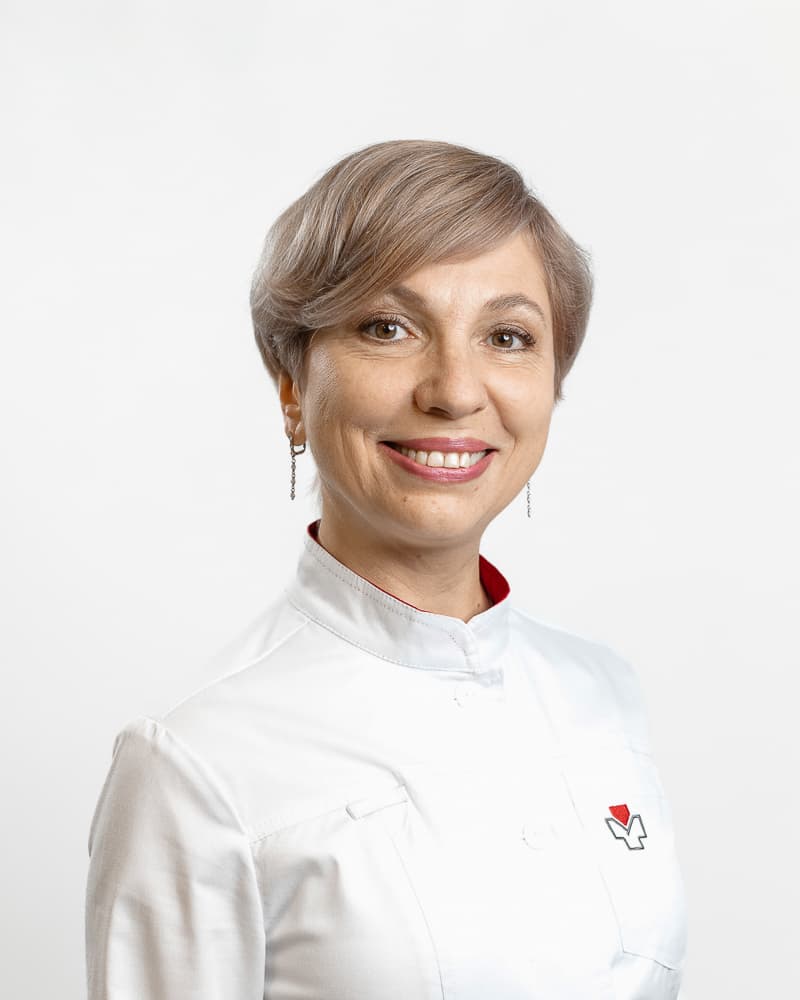
Savina Olena Mykhailivna
Ophthalmologist, Pediatric ophthalmologist

A child’s vision develops from the first days of life, making regular examinations by a pediatric ophthalmologist important for identifying visual disorders that may not be noticeable to parents. At Doctor Sam Medical Center, we provide comprehensive eye examinations, preventive check-ups, and treatment for eye conditions in children from birth. We help identify myopia, hyperopia, astigmatism, strabismus, amblyopia, inflammatory eye conditions, and other visual disorders at an early stage, so children can develop, learn, and explore the world to their full potential.
Ophthalmologist, Pediatric ophthalmologist
If a child has been diagnosed with myopia (nearsightedness), astigmatism, strabismus (eye misalignment), or amblyopia (lazy eye), these conditions should not be expected to resolve on their own. Without timely diagnosis and appropriate follow-up, they may gradually worsen.
At the same time, some aspects of visual development in infants are a normal part of growth and naturally change with age. Only a pediatric ophthalmologist can determine whether these changes are part of normal development or indicate an underlying eye condition. That is why regular preventive eye examinations are recommended, even if your child has no noticeable vision problems. Early detection allows treatment to begin at the most effective stage and helps achieve the best possible visual outcomes.
You can book an appointment with a pediatric ophthalmologist by calling +380 97 312 92 91 or by submitting a request through our website.
Our address: 1 Kiltseva Road Respublika Park Shopping Mall Kyiv, Ukraine
If your child is currently living abroad or you are unable to visit our medical center, you can schedule an online consultation with a pediatric ophthalmologist.


Children cannot always explain that their vision is blurry. This is especially true for young children, who may not realize what normal vision should look like. That is why it is important to pay attention not only to what your child says, but also to changes in their behavior. Schedule a consultation with a pediatric ophthalmologist if your child:
Even if your child has no complaints, regular preventive eye examinations remain the best way to detect vision problems at an early stage. Some eye conditions, including amblyopia (lazy eye) and the early stages of strabismus (eye misalignment), can develop with little or no noticeable symptoms.
Over the past few years, myopia (nearsightedness) has become one of the most common vision problems in children. One of the main reasons is a change in lifestyle: children spend more time using digital devices and less time outdoors. The following factors may contribute to the development of myopia:
Parents often notice the problem only when a child starts squinting or has difficulty seeing the board at school. However, vision changes usually develop gradually. The earlier they are detected, the greater the opportunity to slow the progression of myopia and choose the most appropriate monitoring and treatment strategy.
For a comprehensive assessment of your child's eye health, visual acuity, and refractive status, we recommend a pediatric ophthalmology consultation with a comprehensive eye examination. This evaluation provides a complete picture of your child's vision and eye health in a single visit.