
A healthy lifestyle begins with understanding the body’s capabilities
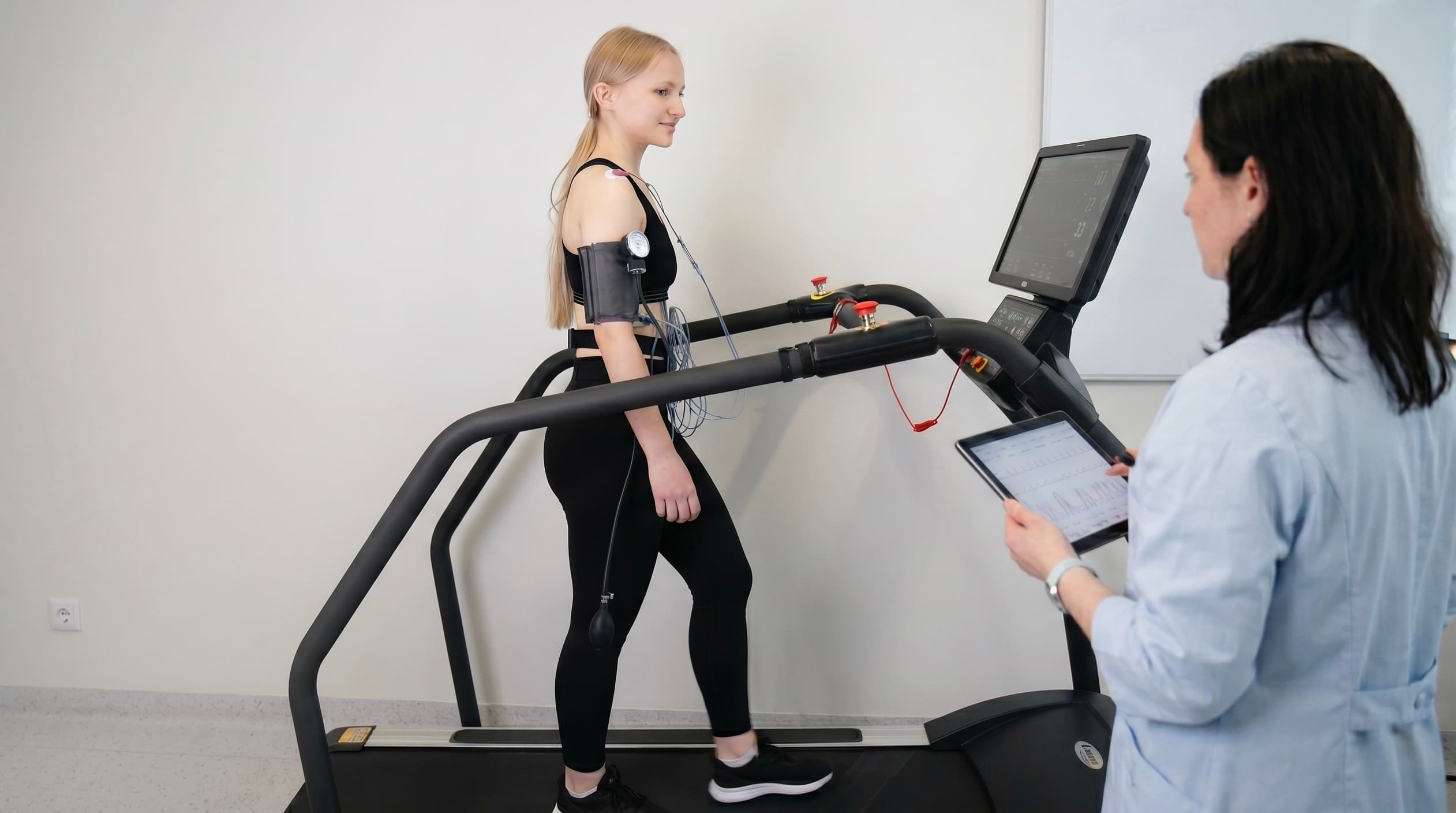
Most people mistakenly believe that cardiac assessment before physical activity is necessary only for professional athletes. In reality, the appearance of shortness of breath, unstable blood pressure, reduced endurance, or discomfort during exertion is most often the reason for medical consultation, regardless of fitness level.
Physical activity today is considered a basic physiological need. Daily walking, training, swimming, cycling, or a gradual return to activity after a sedentary period all place a systemic load on the cardiovascular and respiratory systems. The key is not to avoid movement, but to understand how the body responds to it and what level of intensity is safe.
Why modern medicine no longer supports the concept of “protecting oneself from physical exertion”
Several decades ago, patients with hypertension, excess body weight, or cardiovascular risk factors were often advised to “avoid overloading the body.” Today, this approach has fundamentally changed. Physical activity is now considered part of treatment.
In arterial hypertension, diabetes mellitus, lipid metabolism disorders, excess weight, or chronic stress, appropriately selected exercise helps to:
- stabilize blood pressure;
- improve insulin sensitivity;
- reduce cardiovascular risk;
- increase endurance;
- improve sleep quality and cognitive function.
However, two individuals of the same age may respond differently to the same level of exertion. This is why modern functional diagnostics is essential for making physical activity both safe and effective.
Who should undergo functional diagnostics
High-intensity physical activity
Regular high-intensity training places a significant load on the cardiovascular system. Even in the absence of symptoms, hidden rhythm disturbances, abnormal blood pressure responses, or myocardial overload may be present. Functional assessment helps determine a safe intensity level and reduce potential risks.
Moderate physical activity
This includes regular moderate workouts, gym training, running, swimming, or consistent daily physical activity. In this group, the key factor is not the presence of exercise itself, but the body’s response to it. Functional diagnostics allows objective evaluation of cardiovascular and respiratory adaptation, blood pressure stability, and recovery efficiency after exertion.
Lifestyle modification in chronic conditions
Patients with arterial hypertension, lipid metabolism disorders, diabetes mellitus, excess body weight, or low physical activity require individualized exercise prescription. In such cases, physical activity is part of a therapeutic strategy, and its intensity must match the body’s functional capacity. Diagnostic evaluation helps establish a safe starting level and monitor subsequent adaptation.
Depending on the patient’s needs, level of activity, and clinical situation, a physician may recommend:
- ECG / 24-hour ECG monitoring
- Echocardiography (ECHO)
- Treadmill stress test
- Spirometry
- Spirometry with bronchodilator test
- Exercise-induced bronchoprovocation test on a treadmill
- 24-hour blood pressure monitoring
- Medical consultation based on test results
A comprehensive approach makes it possible to understand how the body adapts to different levels of physical load.
The most important thing to understand about physical activity
Modern medicine does not aim to restrict physical exertion. On the contrary, physical activity should remain an essential part of life at any age and in the presence of comorbidities. What changes is the type, intensity, and level of supervision.
This is why functional diagnostics is about understanding your body, moving safely, and maintaining health without fear of physical activity.
At Doctor Sam, comprehensive functional diagnostics of the cardiopulmonary system is available for both adults and children. The examinations help assess the body’s response to exertion, identify potential risks, and determine a safe level of physical activity based on individual patient characteristics.
Taking care of health means knowing how to move correctly.