Neurofeedback and biofeedback – brain and nervous system training
Neurofeedback
Neurofeedback is a method of brain training based on biological feedback. A computer program reads brainwave activity and provides the person with real-time visual or auditory signals about how their brain is functioning.
Through this process, the brain learns to recognize its own inefficient patterns and gradually shift to more stable and healthier modes of operation. Neurofeedback is a type of biofeedback, but unlike general biofeedback, it specifically focuses on brain activity rather than heart rate or other physiological indicators.
The method is used as a primary or supplementary support for ADHD (attention deficit hyperactivity disorder), sleep disturbances, anxiety, depressive states, PTSD (post-traumatic stress disorder), consequences of brain injuries, age-related cognitive changes, and behavioral disorders.
What to Expect from Neurofeedback
Neurofeedback is not a one-time procedure but a training process. The number of sessions is determined individually based on the client's needs and the state of their nervous system.
Between sessions, clients often notice reduced tension, more stable mood, improved concentration, better sleep, and clearer thinking. The effects accumulate gradually as the brain learns self-regulation and carries these changes into everyday life.
Neurofeedback does not artificially alter you. It is a procedure that helps your nervous system recall how to function more calmly, more focused, and more efficiently in its natural rhythm.
How a neurofeedback session works
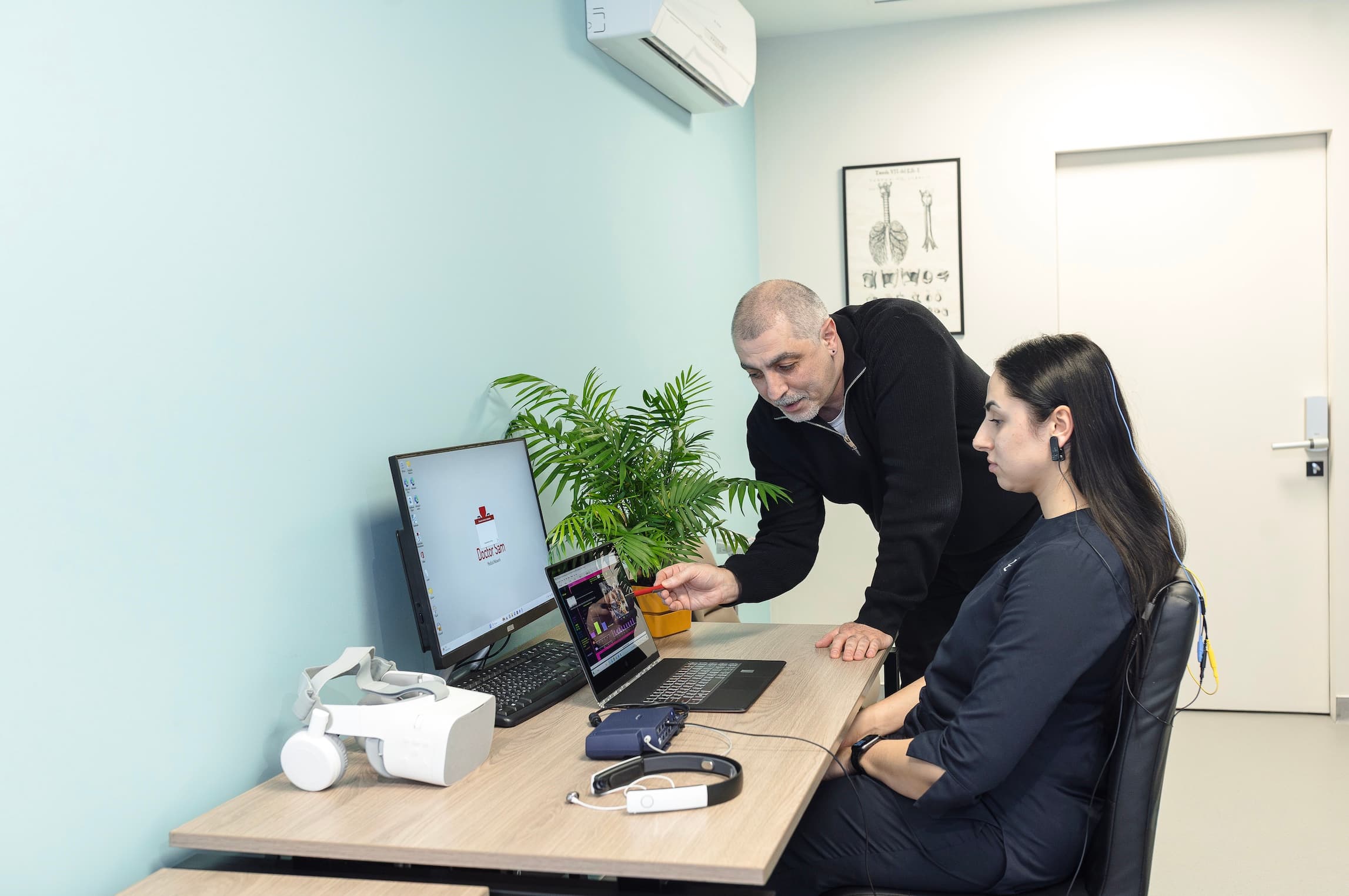
A neurofeedback session lasts from 30 to 60 minutes. You sit comfortably in a relaxed position. The doctor places electrodes on your scalp using a conductive gel. These only read the brain’s electrical activity and do not stimulate it.
The data is transmitted to a computer, where it is displayed as graphics, animations, or sounds. When brainwaves shift toward a more balanced state, the program instantly provides positive feedback. Through repetition, the brain gradually "learns" more effective patterns of operation.
During the session, you remain fully conscious, without any medication or sedation. After the session, you can immediately return to your normal daily routine.
Biofeedback
Biofeedback is a modern method of self-regulation training that helps you learn to manage your body's states by becoming aware of its reactions. It reveals how you breathe, how your heart responds, where tension builds up, and how your body reacts to stress.
In everyday life, most people operate in a constant state of tension. Breathing becomes shallow, muscles stay clenched, and heart rate accelerates. This leads to chronic fatigue, anxiety, sleep problems, headaches, and a sense that the body "doesn't recover."
Biofeedback helps you see these processes in real time and gradually learn to influence them.
How a biofeedback session works
During a biofeedback session, special sensors are attached to your body. They measure physiological indicators such as breathing, pulse, muscle tension, or other responses. All this information is displayed on a screen as clear graphs or signals. You immediately see how your body's state changes depending on your breathing, thoughts, or emotions.
Together with a specialist, you learn to:
- Slow down and deepen your breathing
- Reduce muscle tension
- Stabilize heart rate
- Enter a state of calm more quickly
The key value of biofeedback is immediate feedback. The body literally shows what helps it and what does not. Because of this, self-regulation skills develop faster and are reinforced in practice.
What Biofeedback Provides
Over time, you begin to better recognize your body's signals and respond to them before tension builds up. Biofeedback is effective for:
- Chronic stress and anxiety states
- Psychosomatic symptoms
- Sleep disturbances
- Headaches and muscle tension
- Emotional burnout
- Concentration difficulties
A session typically lasts 30-40 minutes. Afterward, you often feel relaxation, reduced internal tension, warmth in the body, or calm clarity.
A course consists of several sessions. With each one, your body enters stable states more quickly, and self-regulation skills start working automatically — in real-life situations.
Biofeedback is about restoring contact with your body. It's the moment when you once again feel that you can influence your state through understanding and practice.